Another September, another Apple keynote, and naturally, a whole new batch of devices to start thinking about upgrading to.
Apple unveiled quite a bit this time around, including the iPhone 18 Pro and Pro Max, AirPods 5, Apple Watch Series 12 and Apple Watch Ultra 4, alongside iOS 27, watchOS 27 and a much bigger push for Apple Intelligence and the new Siri AI.
There’s a lot to unpack, but personally, the Apple Watch Series 12 is probably the announcement I’m most excited about, particularly with the new Readiness score and much more frequent health tracking.
And then there’s the iPhone Duo. That deserves a whole conversation of its own.
For now, here are some of the biggest things that caught my attention from Apple’s September 2026 keynote.
iPhone 18 Pro and Pro Max: That camera 👀
Starting with the iPhone 18 Pro and Pro Max, because the camera upgrade this year is actually pretty interesting.
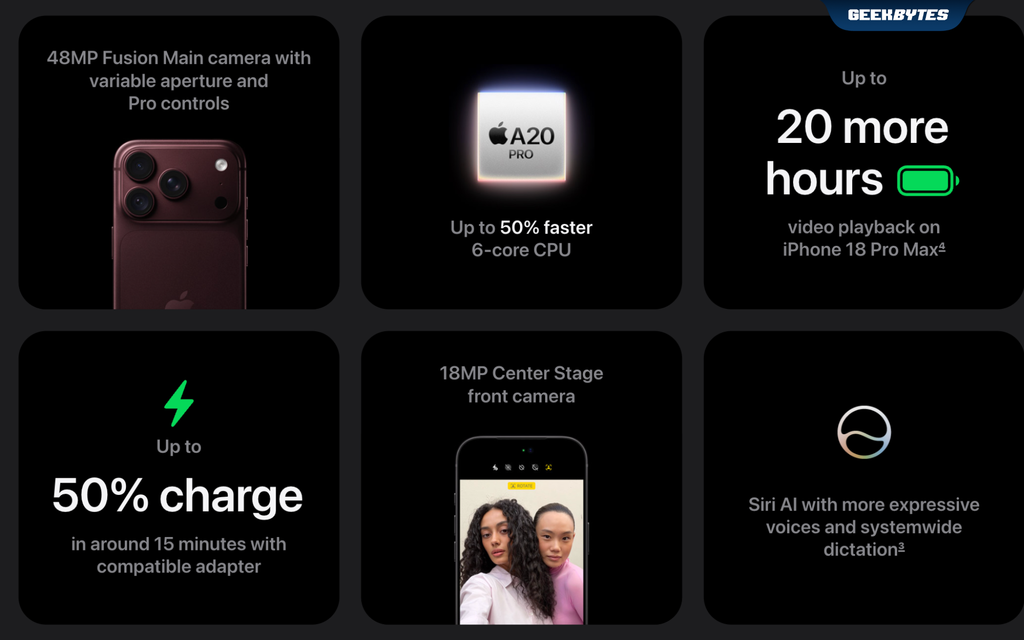
Apple has introduced a new 48MP Fusion Main camera with variable aperture, which means the camera can physically adjust its aperture depending on lighting and the depth of field you want.
There are six aperture blades inside, and you can either let the iPhone handle things automatically or manually choose between four aperture settings.
For people who actually like fiddling with their camera settings, there’s also a new Pro controls interface in the Camera app. You can adjust aperture, shutter speed and white balance, and there’s finally a histogram for checking exposure.
That is a surprising amount of manual control for an iPhone camera.
Video gets some love too. You can now apply Cinematic effects after filming at up to 60fps, Time-lapse supports 4K Dolby Vision HDR, and Audio Mix has been improved to better isolate voices and music.
Apple Reference Image is really interesting
One feature that could end up being much more important than it initially sounds is Apple Reference Image.
When you shoot in Reference mode, the iPhone captures signed sensor data and creates an unalterable reference image alongside your photo.
Think of it almost like a digital negative.
You can compare the reference against the finished image to see whether it has been edited, and Apple is also adding support for metadata that can help identify AI-generated or AI-edited images.
With AI imagery getting increasingly difficult to distinguish from actual photography, I can see this becoming particularly useful for photographers and photojournalists.
A20 Pro gets seriously powerful
Inside both Pro models is the new A20 Pro, built using a 2nm process.
Apple says there’s 50% more memory bandwidth compared to A19 Pro, while the new 7-core GPU is up to 40% faster.
There’s also a dual 16-core Neural Engine, giving you 32 cores dedicated to increasingly demanding AI and computational photography tasks.
More interestingly, Apple has redesigned the thermal system.
The new vapour chamber has three times the surface area of the previous generation, and the A20 Pro can attach directly to it. Apple says this gives the iPhone 18 Pro up to 40% better sustained performance compared to the previous generation.
So yes, hopefully less turning into a tiny portable heater when you’re pushing it.
Connectivity has been upgraded too, with Wi-Fi 7, Bluetooth 6 and Thread through Apple’s N1 chip, plus the new C2 cellular modem.
The Dynamic Island is smaller
No, the Dynamic Island isn’t going anywhere.
But it is getting smaller.
Apple has redesigned it to take up less space while somehow making it more useful. It can now display three Live Activities at the same time, while Face ID continues to sit within the system.
I’ll take more screen space.
Battery life is looking very good
Battery life gets a pretty substantial upgrade this year.
The iPhone 18 Pro is rated for up to 34 hours of video playback, while the Pro Max goes all the way up to 43 hours.
Charging is quicker too, with the 18 Pro able to hit 50% in around 15 minutes with wired charging.
Apple says five minutes of wired charging on the Pro Max can give you roughly seven hours of video playback.
Not bad for the inevitable moment you realise your phone is at 8% right before leaving the house.
Siri AI is finally here
Then there’s Siri.
Or rather, Siri AI.
It launches in beta with iOS 27 and is essentially the version of Siri we’ve been waiting for since Apple Intelligence was first announced.
Siri can now understand personal context across things like your messages, emails and photos, as well as what’s happening on your screen.
So instead of needing to remember exactly where something came from, you could theoretically ask Siri to find information buried inside an email or message and act on it for you.
There’s also a Siri mode inside the Camera app, so you can point your camera at something and ask questions about what you’re looking at.
Elsewhere, Apple Intelligence brings Spatial Reframing, Extend and an improved Clean Up to photos, while Image Playground can now create photorealistic images.
Safari is also getting Notify Me, which lets you monitor webpages for changes such as restocks and price drops.
That one could either be extremely useful or extremely dangerous for my wallet.
iPhone 18 Pro pricing in Singapore
Both models now start with 256GB of storage and go all the way up to 2TB.
The iPhone 18 Pro starts at S$1,899, while the iPhone 18 Pro Max starts at S$2,099.
There are four colours this year: black, silver, glacier and a new burgundy.
Pre-orders started last night, with availability from 18 September.
AirPods 5: ANC gets more accessible
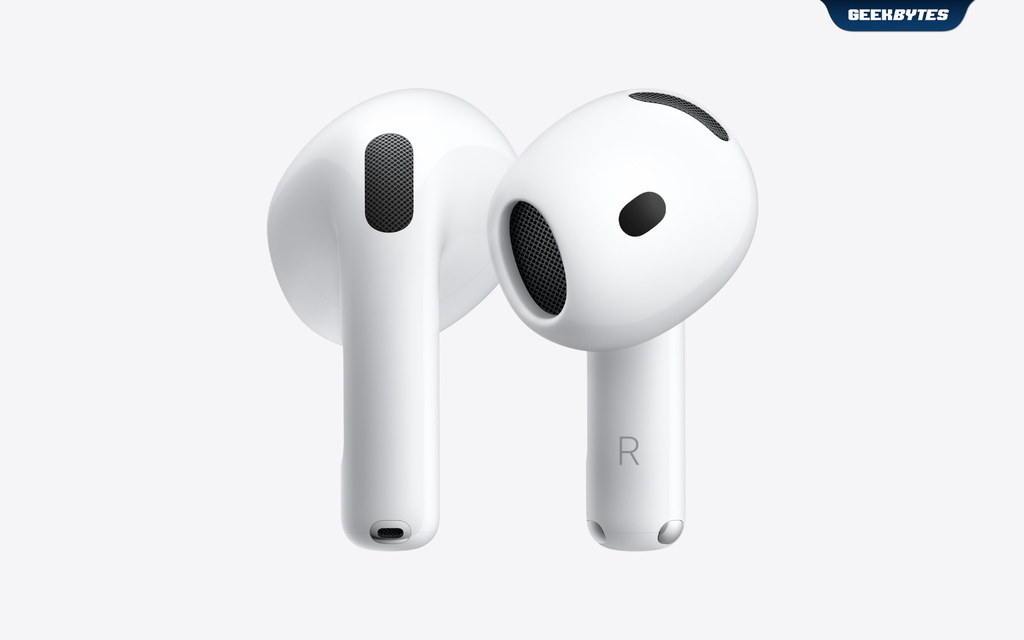
AirPods 5 are here, and the headline feature is improved Active Noise Cancellation in Apple’s open-ear design.
Apple says they can remove up to 50% more external noise compared to AirPods 4 with ANC.
There’s also a redesigned acoustic architecture and new Adaptive EQ, alongside Transparency mode, Adaptive Audio and Conversation Awareness.
Basically, a lot of what we’ve come to expect from the more expensive AirPods experience is slowly making its way down the lineup.
AirPods become another way to talk to Siri AI
With a compatible iPhone, AirPods 5 give you hands-free access to Siri AI.
You could, for example, ask Siri to find a restaurant reservation buried in your email or play something a friend recommended in a message without touching your phone.
You can also continue responding to Siri by nodding or shaking your head, which is one of those tiny AirPods features that makes much more sense once you’ve actually used it.
Live Translation is also expanding, letting you hear conversations translated through your AirPods in real time.
On the higher-end AirPods 5 model, Apple is finally adding volume controls directly to the stem.
Battery life sits at up to five hours with ANC enabled and up to 22 hours with the charging case.
AirPods 5 will be available from 18 September.
Apple Watch Series 12: Okay, this is the one I want
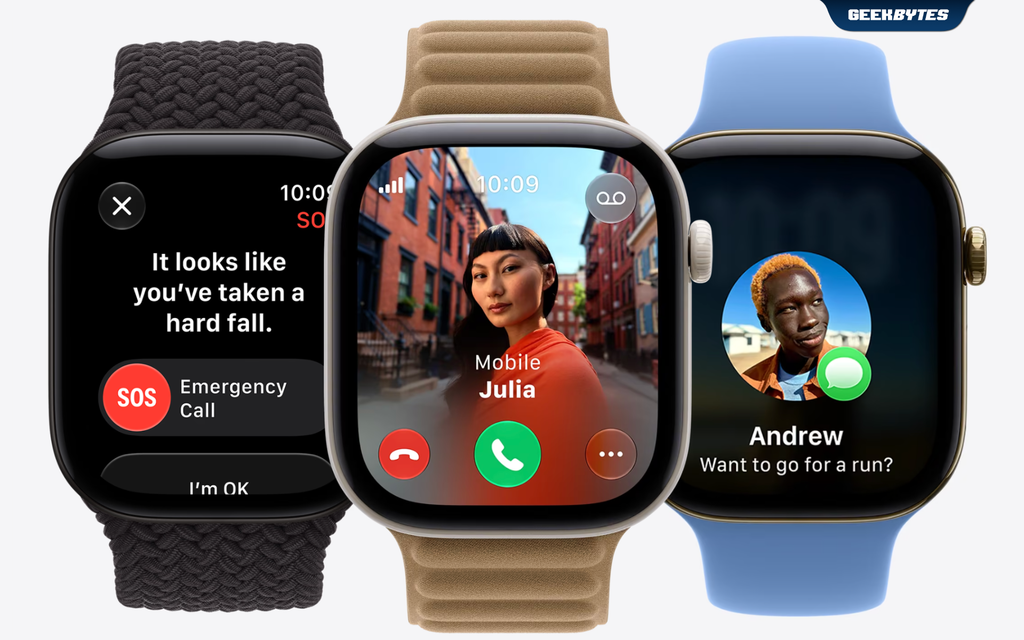
Of everything Apple announced, Series 12 is probably what I’m most excited to get my hands on.
The big update is the new Health Sensing System, powered by Apple’s S11 chip.
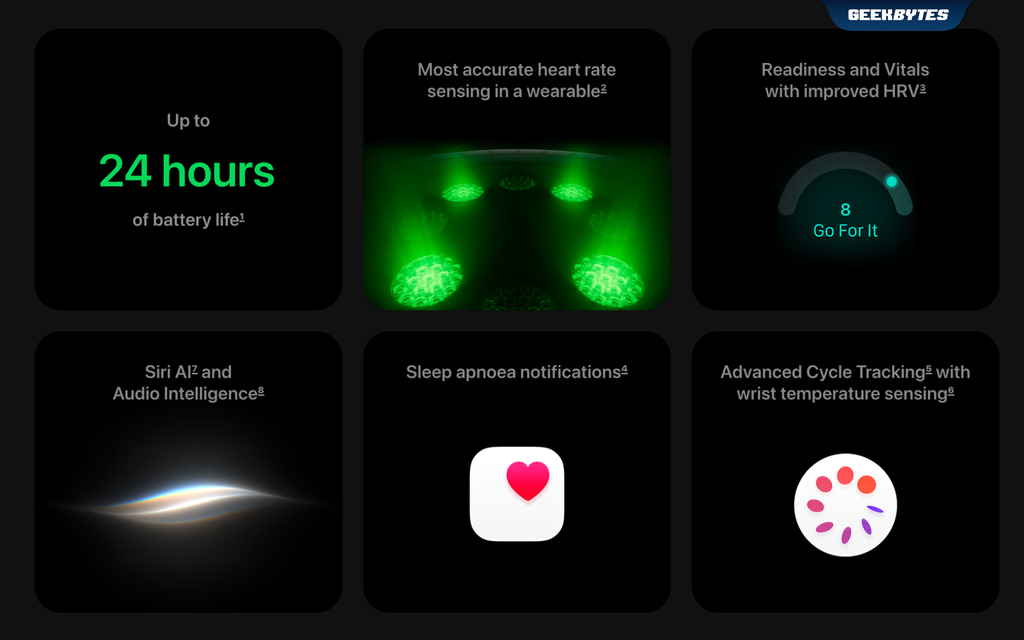
Apple says Series 12 now has the most accurate heart rate sensing it has ever put into a wearable, with the watch measuring your heart rate as frequently as every five seconds throughout the day.
HRV measurements are also taken up to 24 times more frequently.
There are now two different ways of looking at HRV too. Recovery HRV focuses more on your daily stress and recovery, while overall HRV gives you a broader picture of your longer-term health.
As someone who already likes having all that health and fitness data on my wrist, this is exactly the sort of Apple Watch update that interests me.
But the feature I really want to try is…
Readiness!
Finally.
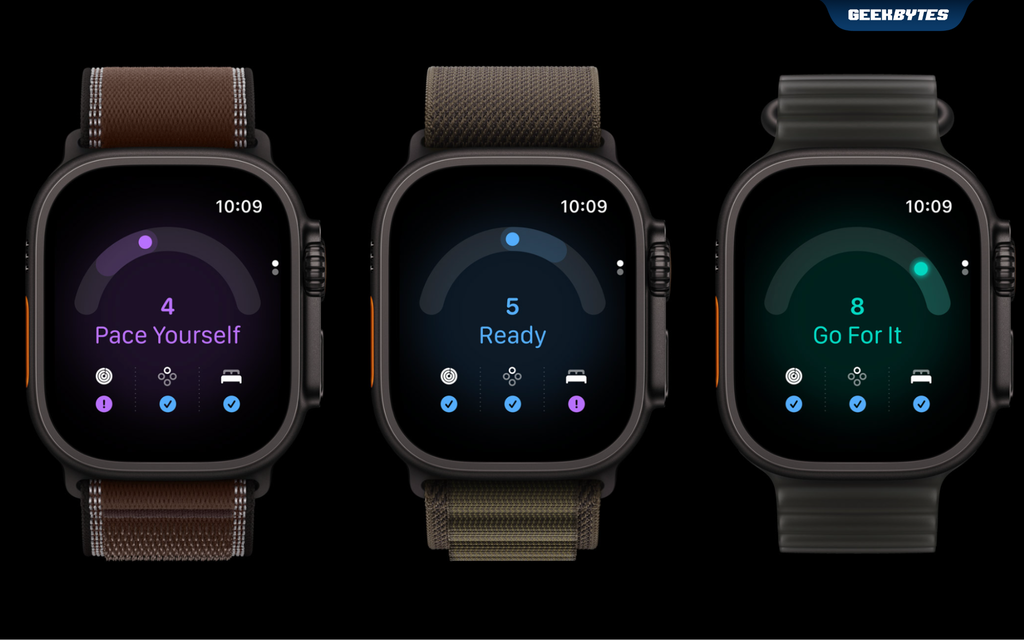
Series 12 introduces a proper Readiness score, which uses your recent activity, training load, vitals and sleep to work out how prepared your body is for the day.
You get a score from 0 to 10, accompanied by one of four recommendations:
Recover. Pace Yourself. Ready. Go For It.
And it isn’t just a score you wake up with that stays there for the rest of the day.
Readiness can change as new information comes in. So if you smash out an intense workout or your daytime vitals shift, the score can update accordingly.
For anyone who trains regularly, this is probably one of the most useful Apple Watch additions in years.
I’m very curious to see how accurate it feels in actual day-to-day use.
Your Apple Watch is listening… but not quite how that sounds
Series 12 also introduces something Apple calls Audio Intelligence.
And there are some genuinely interesting ideas here.
Live Rewind lets you double press the Digital Crown to see the previous 15 seconds of a conversation as text. So if you missed what somebody just said, you can quickly check it.
Siri Recap can create a short summary of a conversation with its key points.
Sound Recognition can alert you to things like alarms, sirens, doorbells or a baby crying.
And Shazam can automatically identify music around you and surface it on your watch.
Before anyone starts panicking about their Apple Watch recording every conversation, Apple says the audio isn’t stored. Processing happens inside a hardware-isolated Secure Exclave on the S11 chip and the raw audio is immediately deleted.
Live Rewind also plays an audible chime and displays a microphone indicator when activated.
Live Rewind and Siri Recap are expected to arrive in beta later this year.
The rest of Series 12
Battery life remains at up to 24 hours, but workout battery life has improved to as much as 10 hours.
Charging is faster too. A 15-minute charge can now give you up to 12 additional hours of battery.
And Series 12 finally gets more accurate step tracking, along with a dedicated Steps complication for your watch face.
There are 42mm and 46mm sizes, with aluminium and titanium options.
And ceramic is back!
Apple is offering ceramic Series 12 models in pearl white and night blue, which may be one of the more dangerous announcements of the keynote for me.
Apple Watch Series 12 starts at S$599.
Apple Watch Ultra 4 goes even further
If Series 12 isn’t enough watch for you, there’s the new Apple Watch Ultra 4.
A lot of the major upgrades are shared with Series 12, including the S11 chip, Health Sensing System, Readiness and Audio Intelligence.
The biggest difference, unsurprisingly, is endurance.
Ultra 4 gets up to 50 hours of regular battery life and up to 84 hours in Low Power Mode.
Extended Workout mode can track an outdoor workout for up to 25 hours with full GPS and heart rate readings.
And if that’s somehow still not enough, Max Extended Workout mode goes up to 45 hours while continuing to take GPS readings every second.
Apple Watch Ultra 4 comes in natural and black titanium and starts at S$1,199.
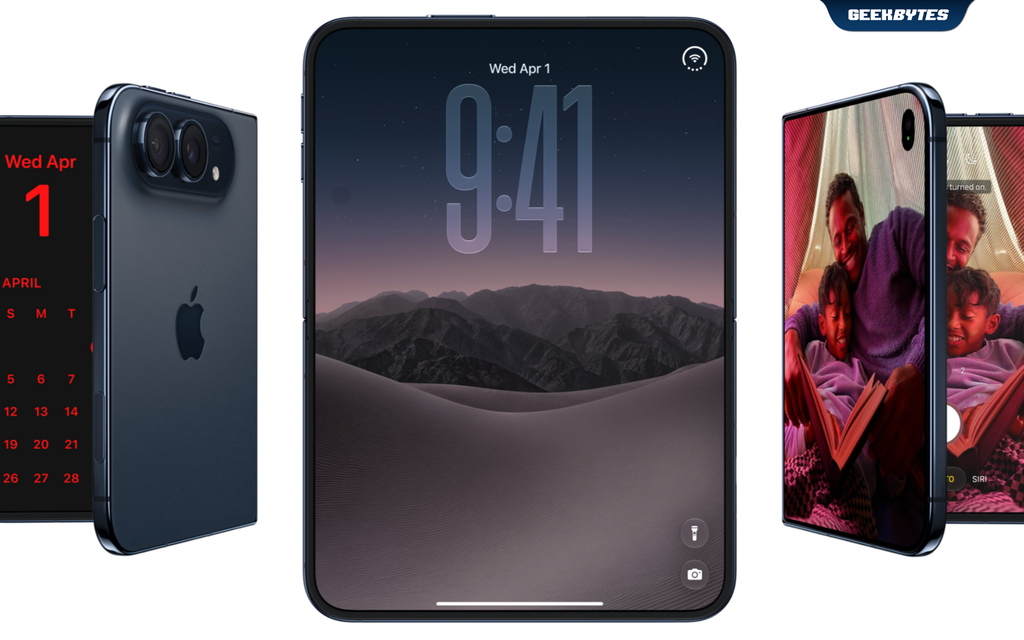
And then there’s iPhone Duo
Okay, this is the other one I’m really excited about.
While the iPhone 18 Pro gets all the serious camera and performance upgrades, iPhone Duo feels like the more interesting device to me simply because it’s something different.
A foldable iPhone has been talked about for what feels like forever, and now that Apple has finally made one, I really want to see how it translates into actual everyday use.
The idea of having an iPhone that opens up into a much larger screen is obviously appealing, but what I’m more curious about is how Apple has approached the whole foldable experience. Things like multitasking, switching between the outer and inner displays, how apps adapt when you open it up, and most importantly, whether the crease is something you eventually stop noticing.
Because specs aside, I think that’s going to be the real test for iPhone Duo.
Apple isn’t the first company to make a foldable phone. Not even close. So for me, the interesting part isn’t simply that Apple made one. It’s whether this finally feels like the version of a foldable that I’d actually want to use every day.
And unfortunately for my bank account, I really, really want to try it.
iPhone Duo comes in Night Sky and Star White, and starts at S$3,099. It will be available for pre-order on 16 October at 8PM SGT, and will be available from 23 October.
So, what am I actually excited about?
There was a lot announced this year, but my two standouts are pretty clear.
Apple Watch Series 12 is probably the most immediately useful upgrade for me. I already use my Watch heavily for health, sleep and fitness tracking, so Readiness, more frequent HRV measurements and the new Health Sensing System are exactly the kind of updates I wanted to see.
But iPhone Duo is the one I’m most curious about.
The Pro is objectively the more powerful iPhone, but Duo feels new. And when we’ve been getting new iPhones every September for nearly two decades, “new” is actually quite exciting.
Do I need a foldable iPhone?
Absolutely not.
Do I want one?
…unfortunately, yes.
More on that one very soon. 👀
iOS 27, watchOS 27 and Apple Intelligence will be available from 14 September, with Apple’s new hardware hitting stores from 18 September.